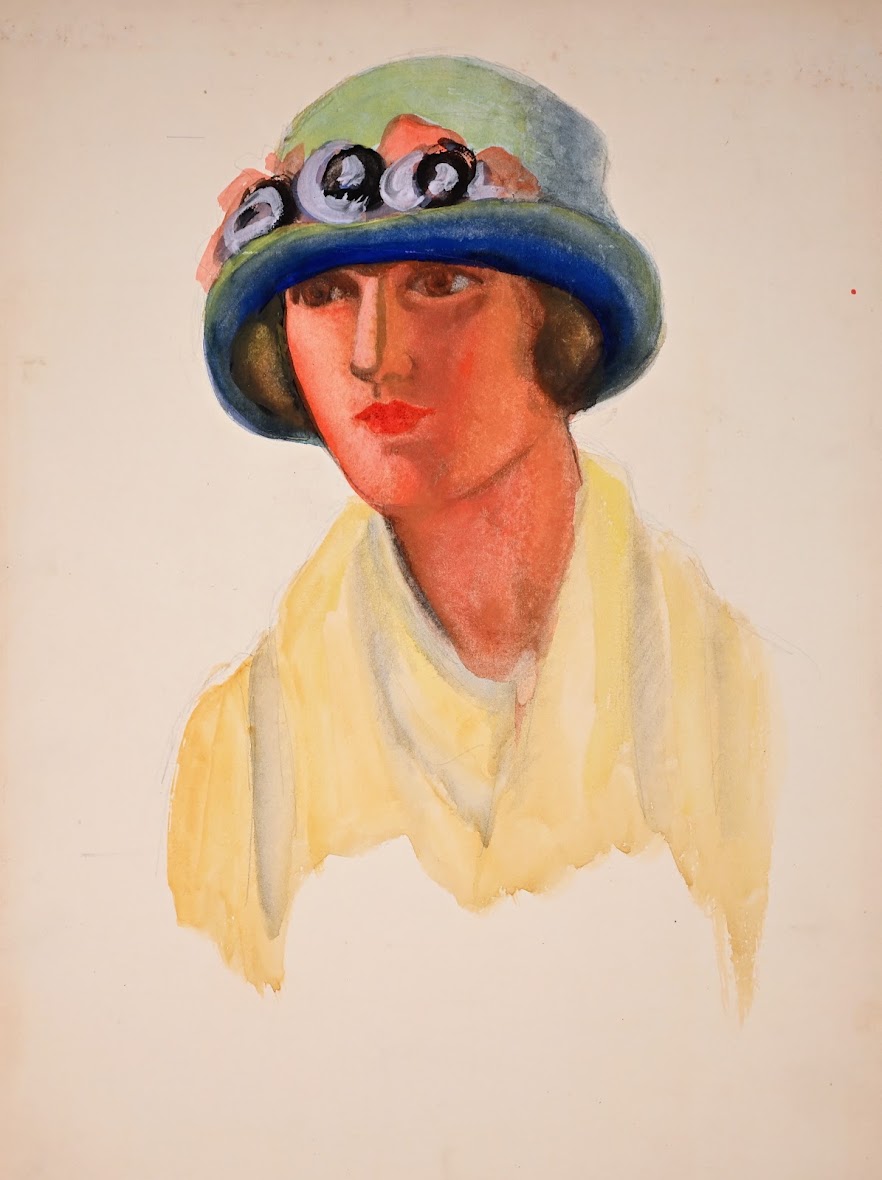
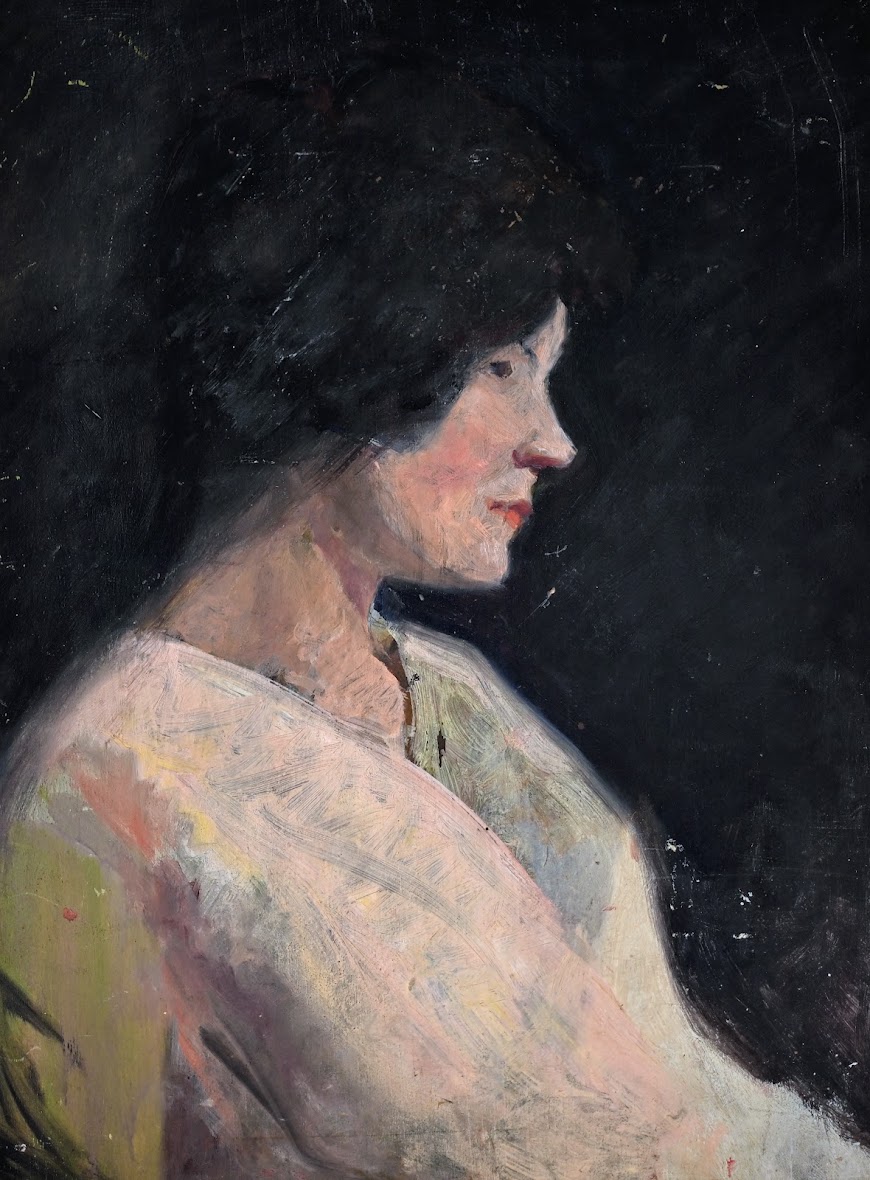
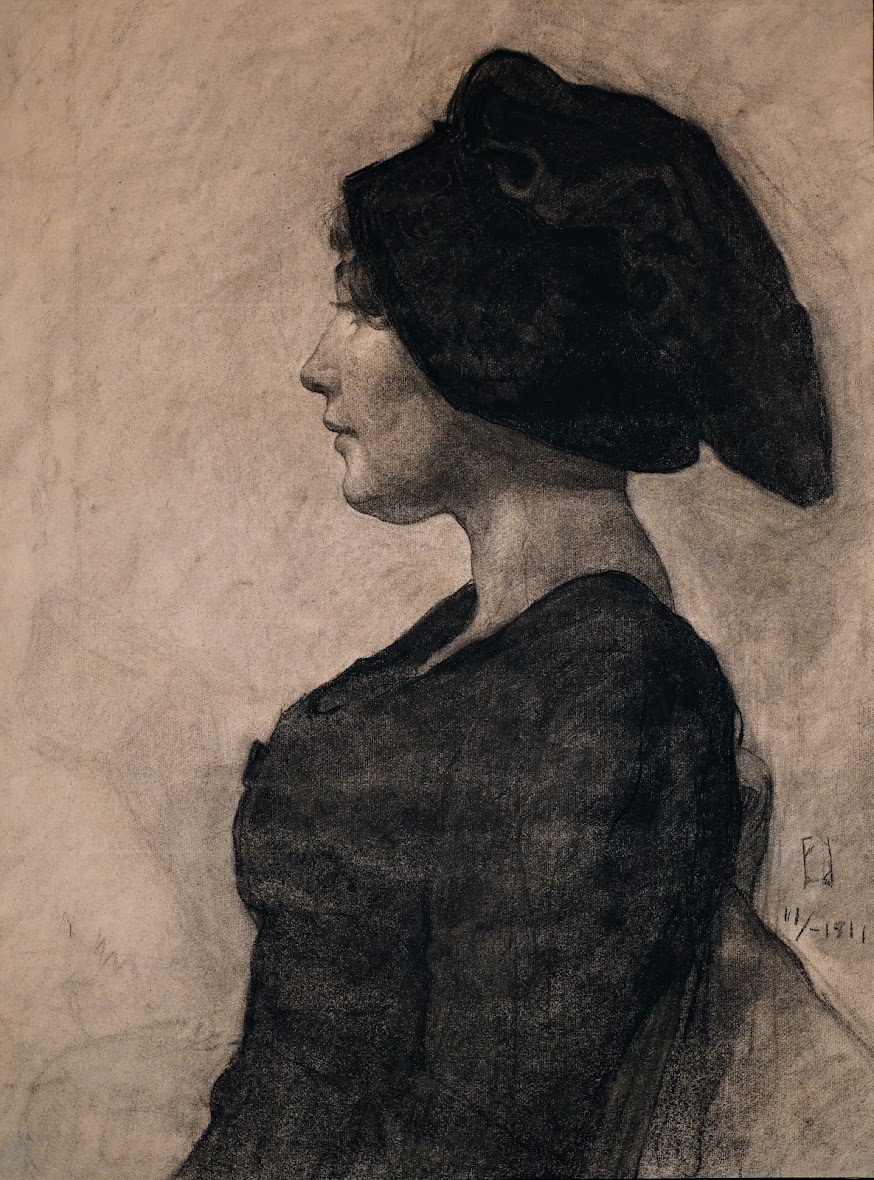
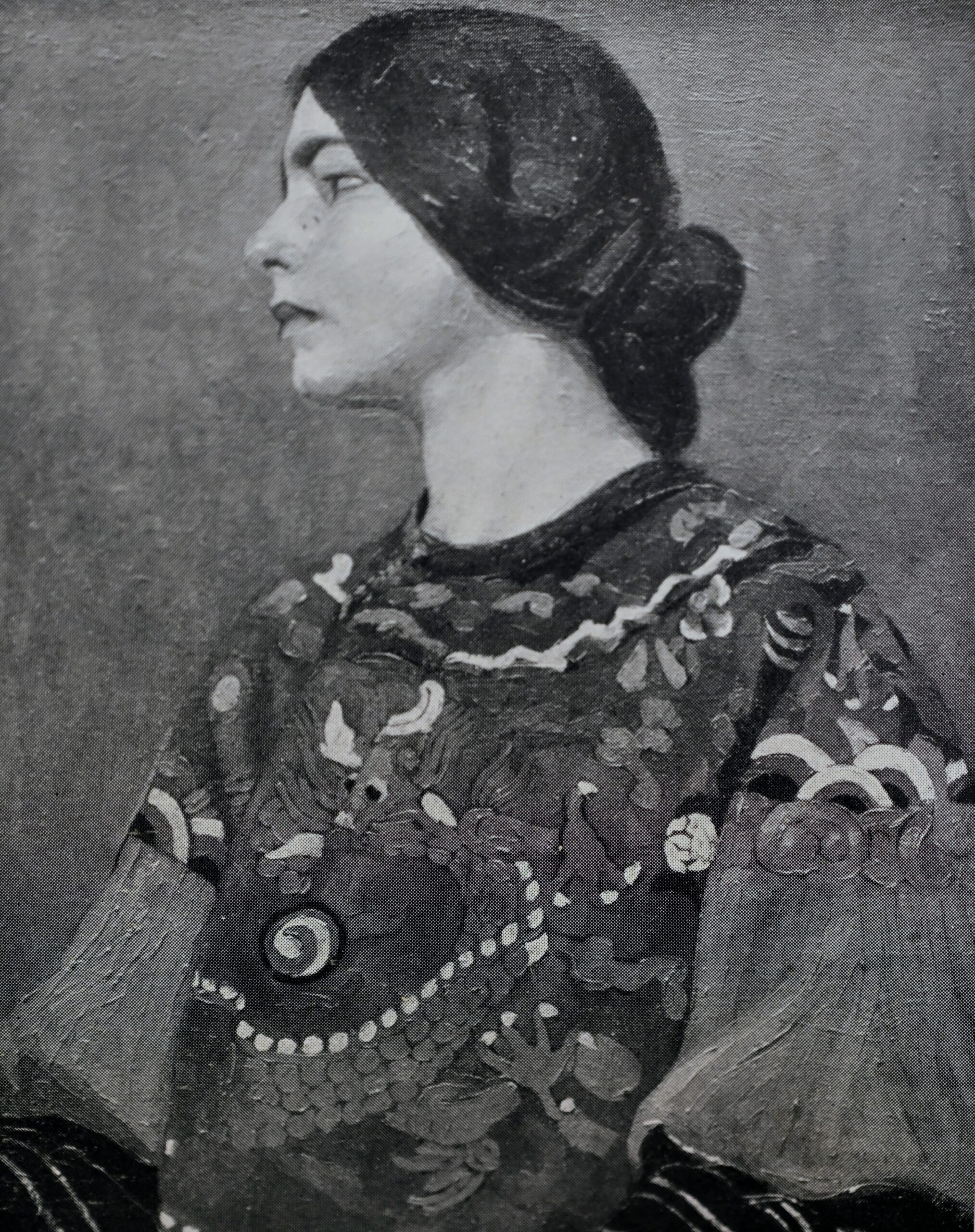
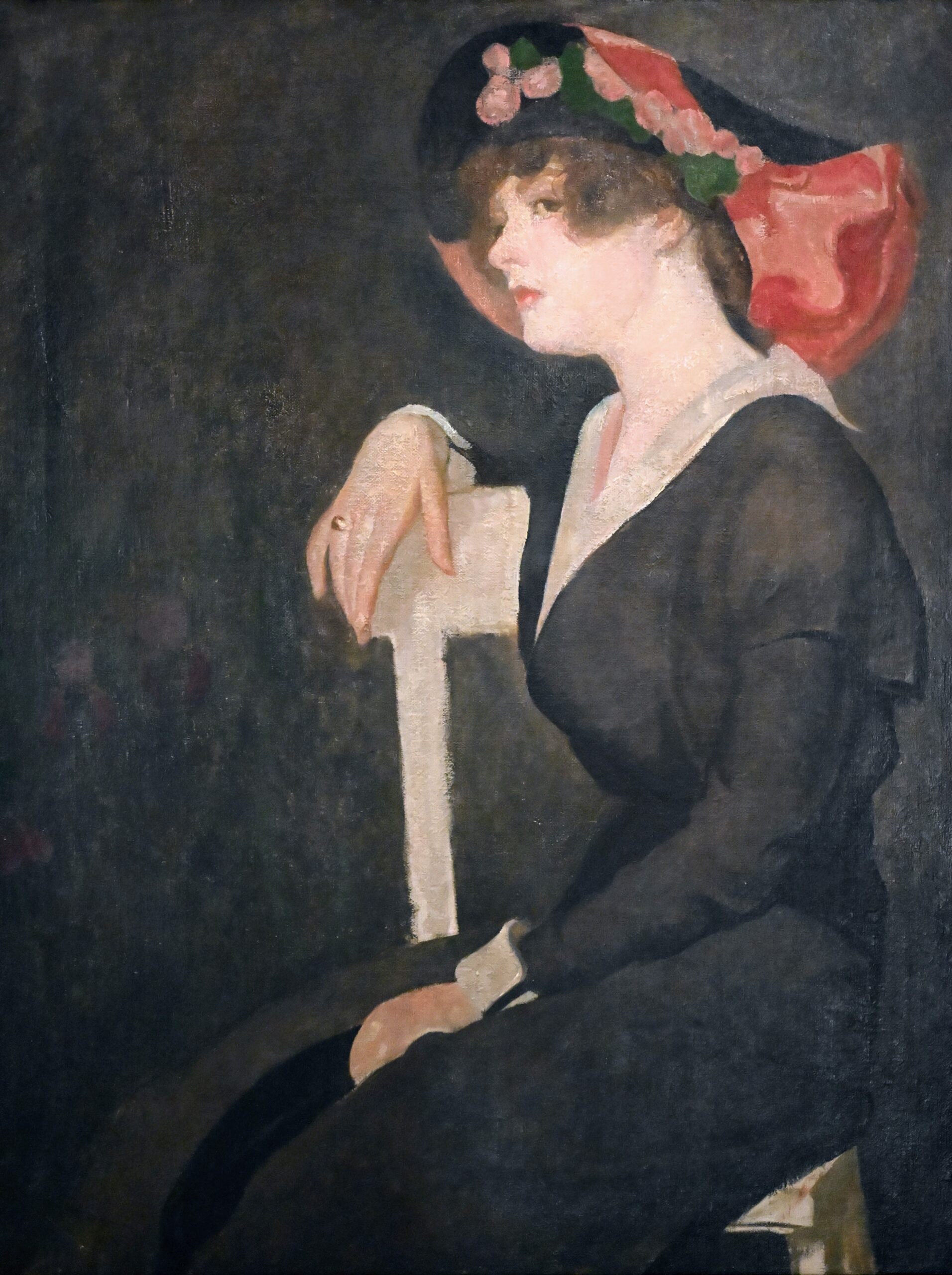
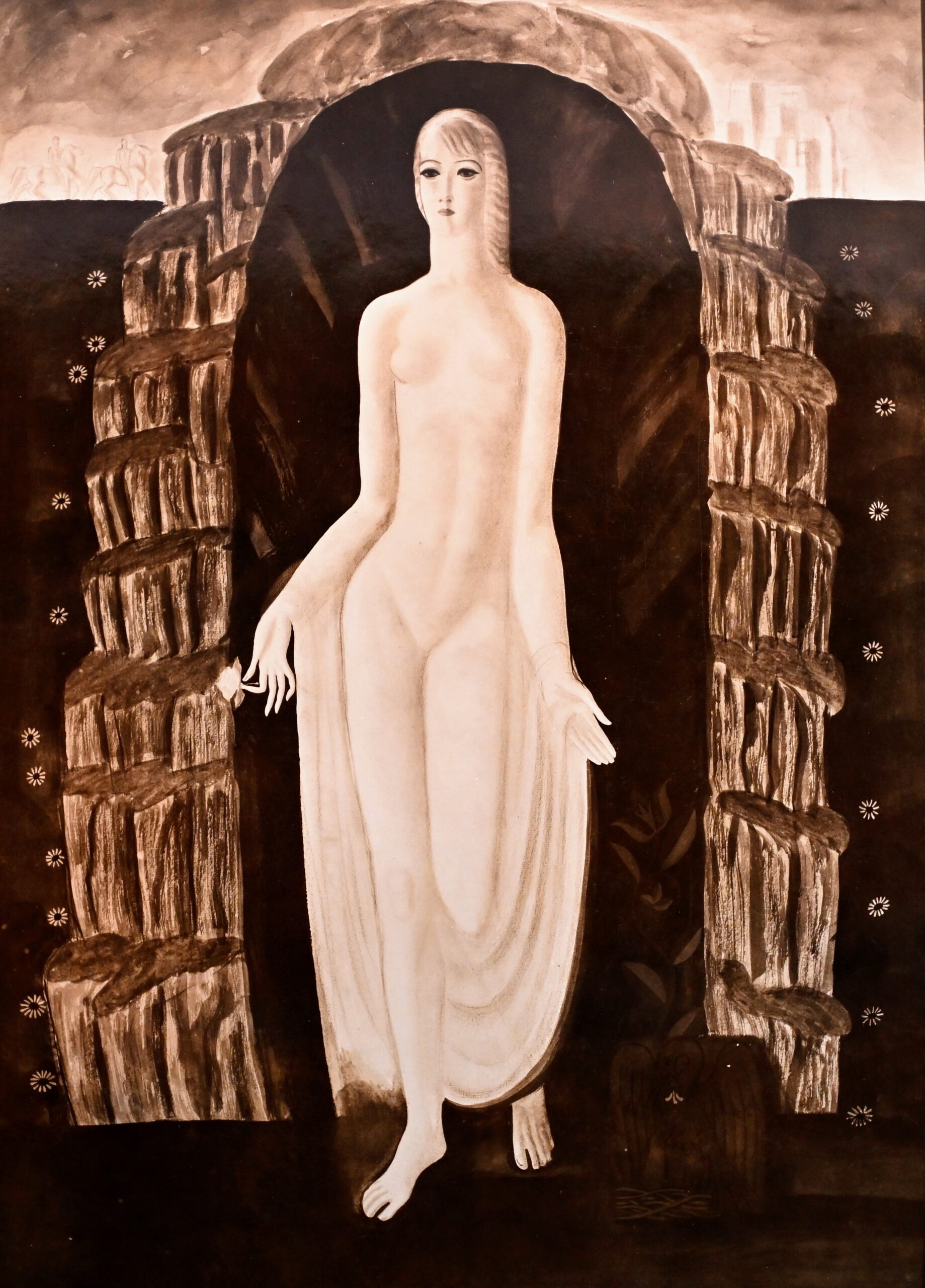
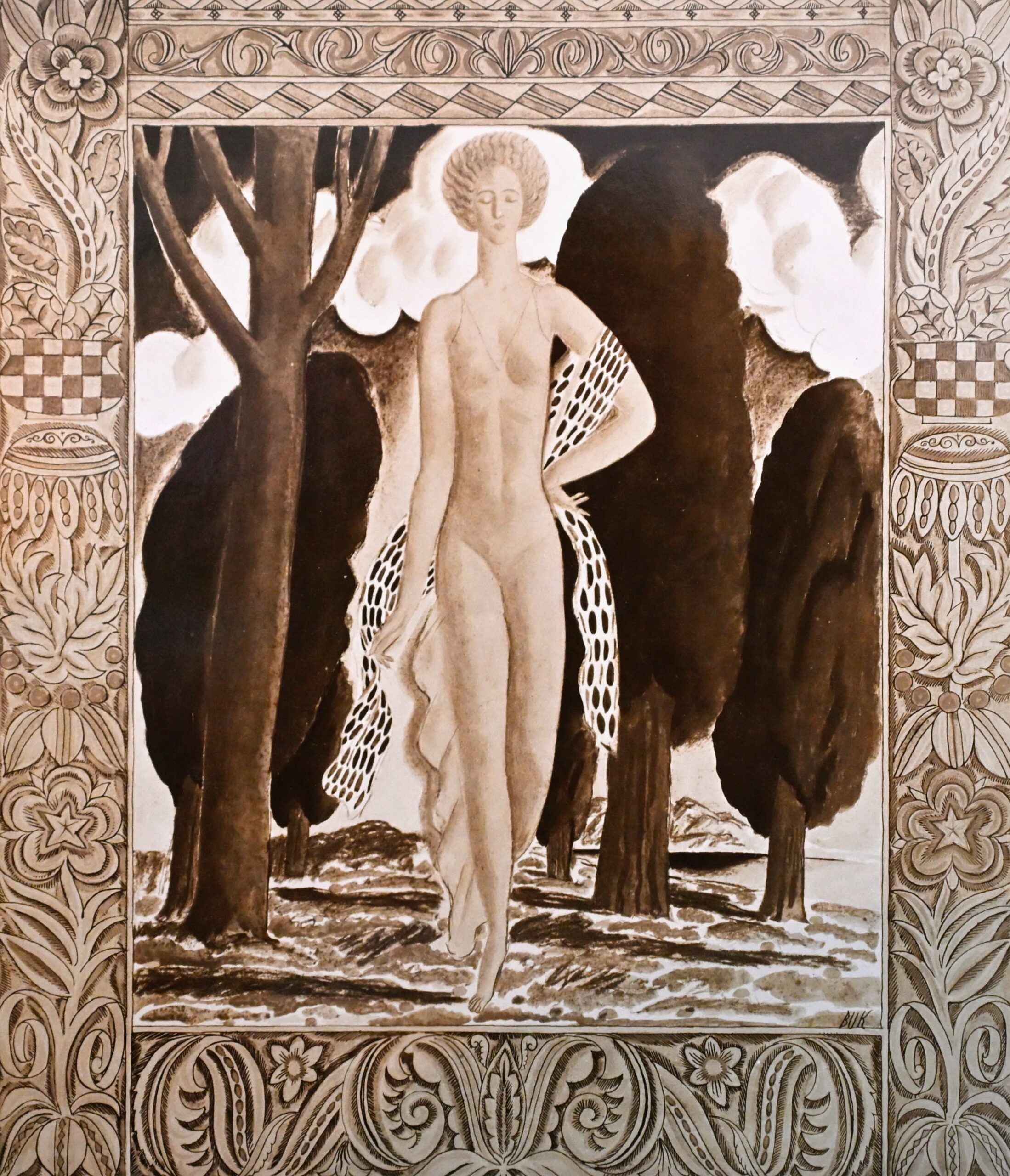
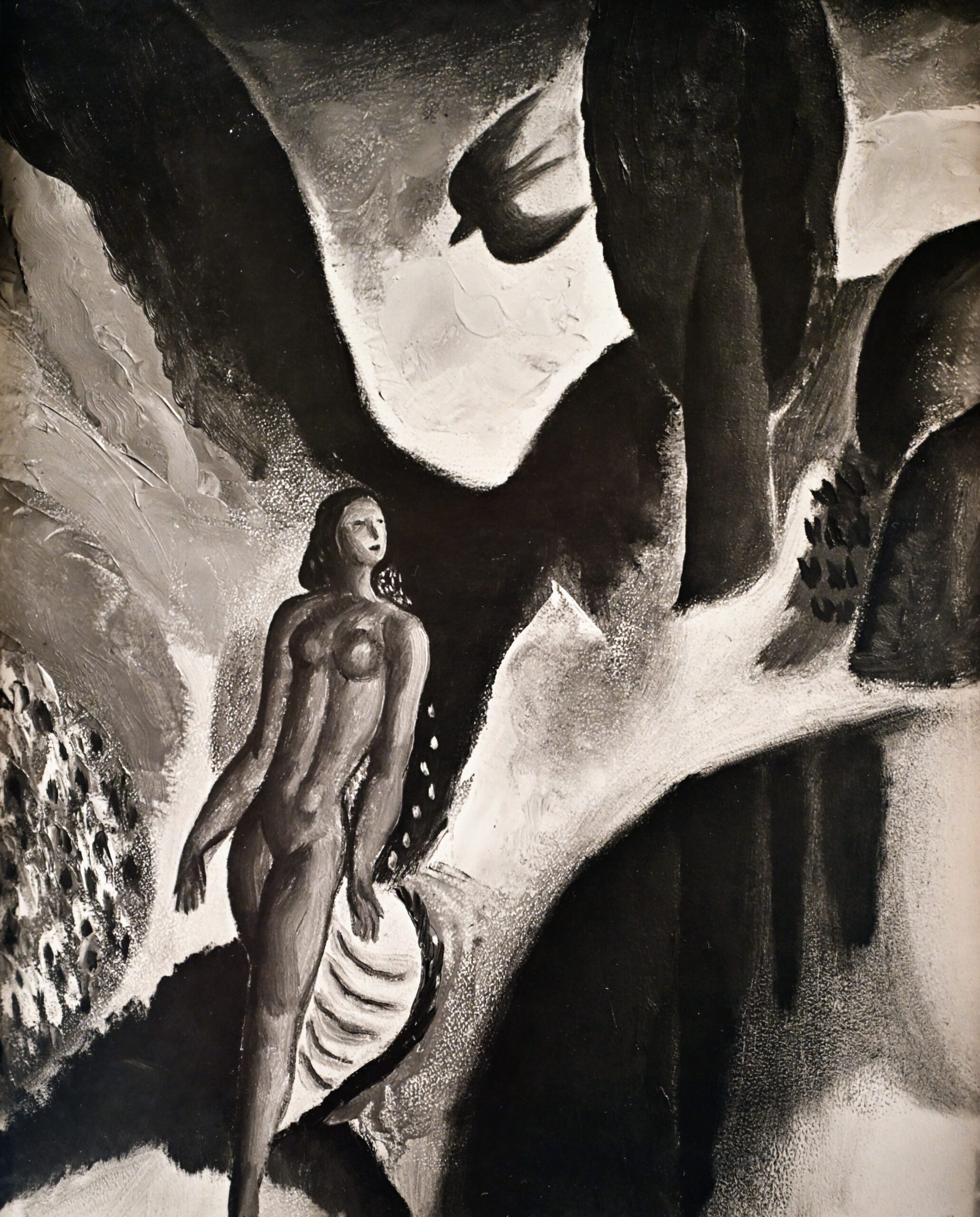
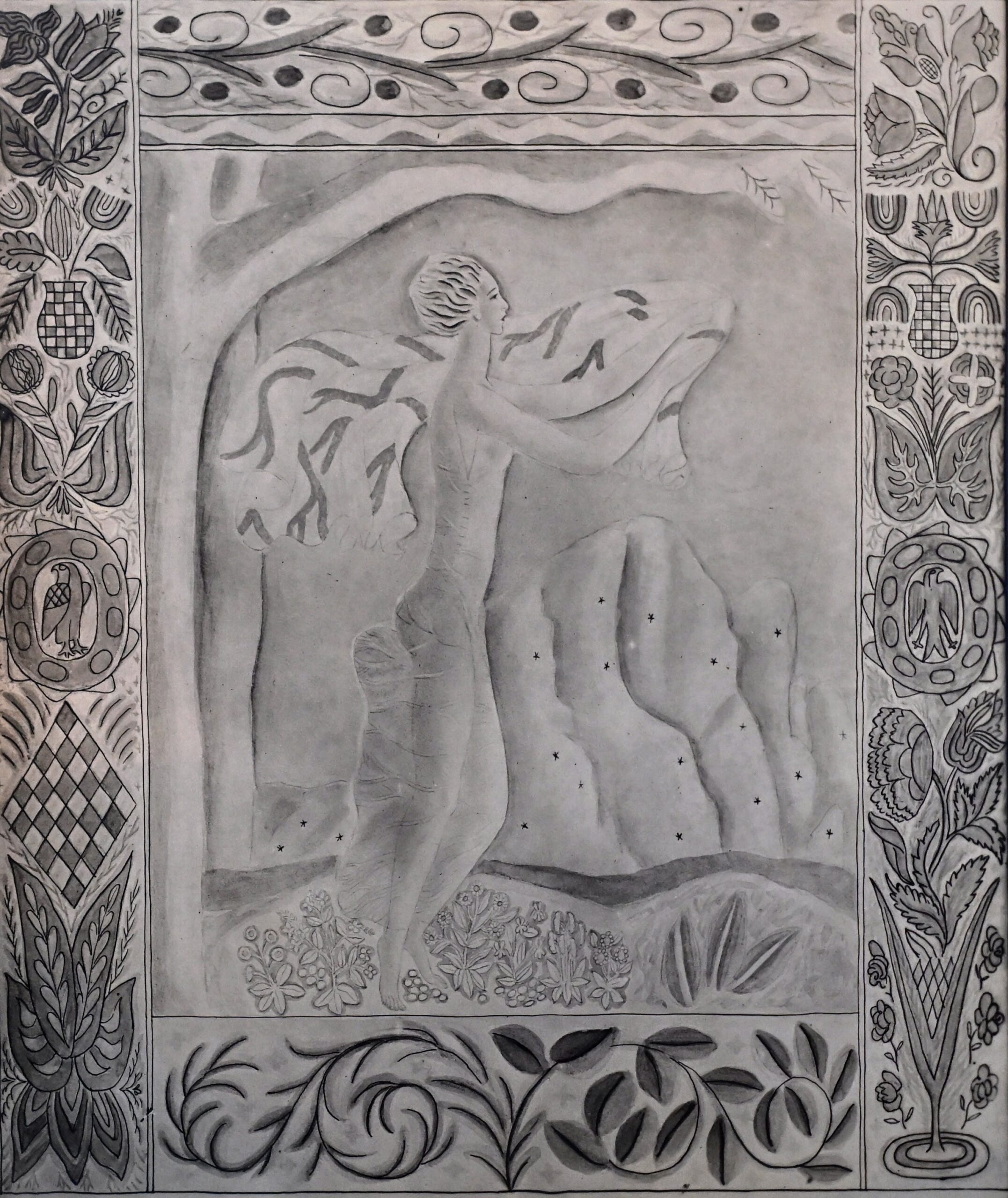
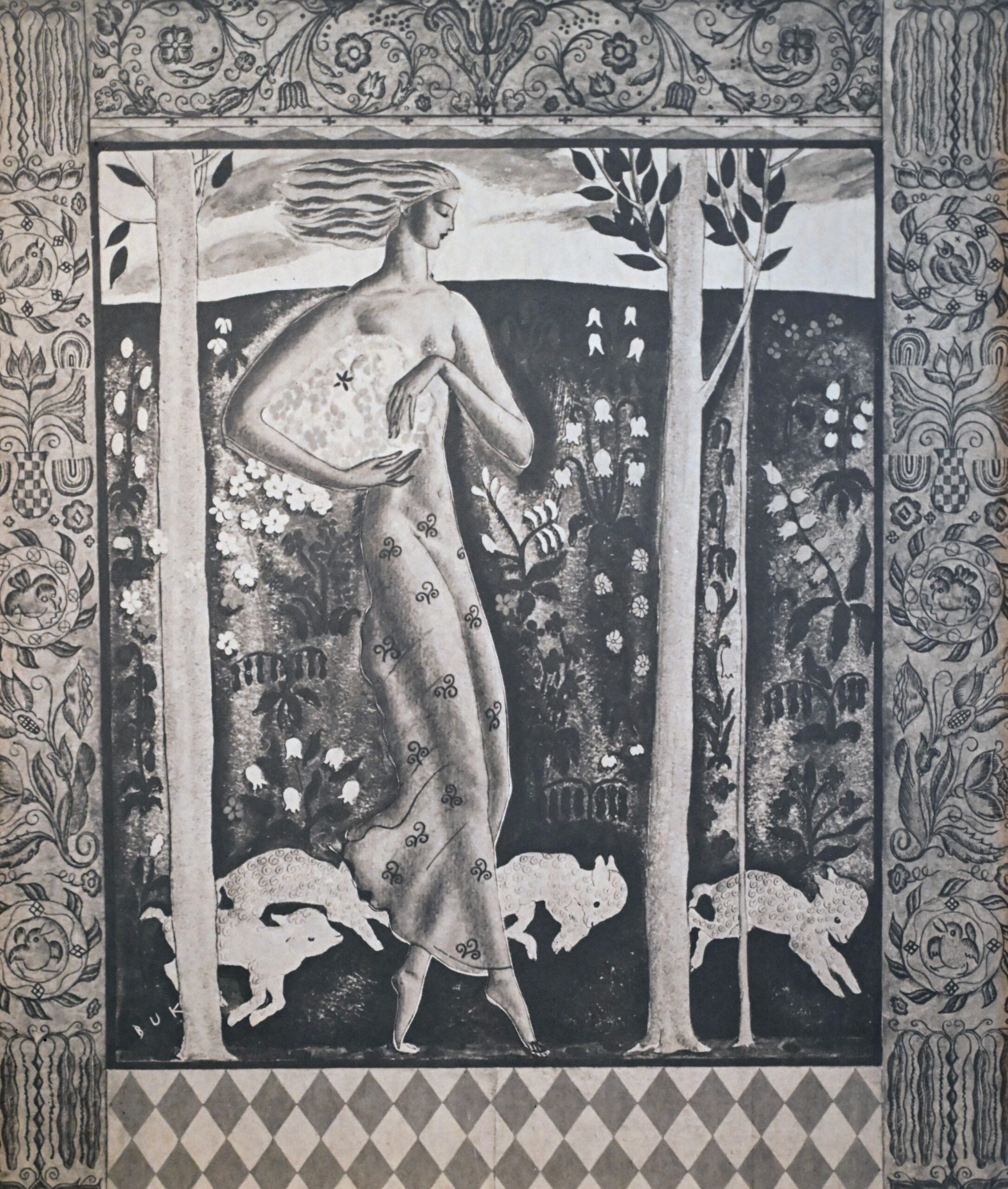
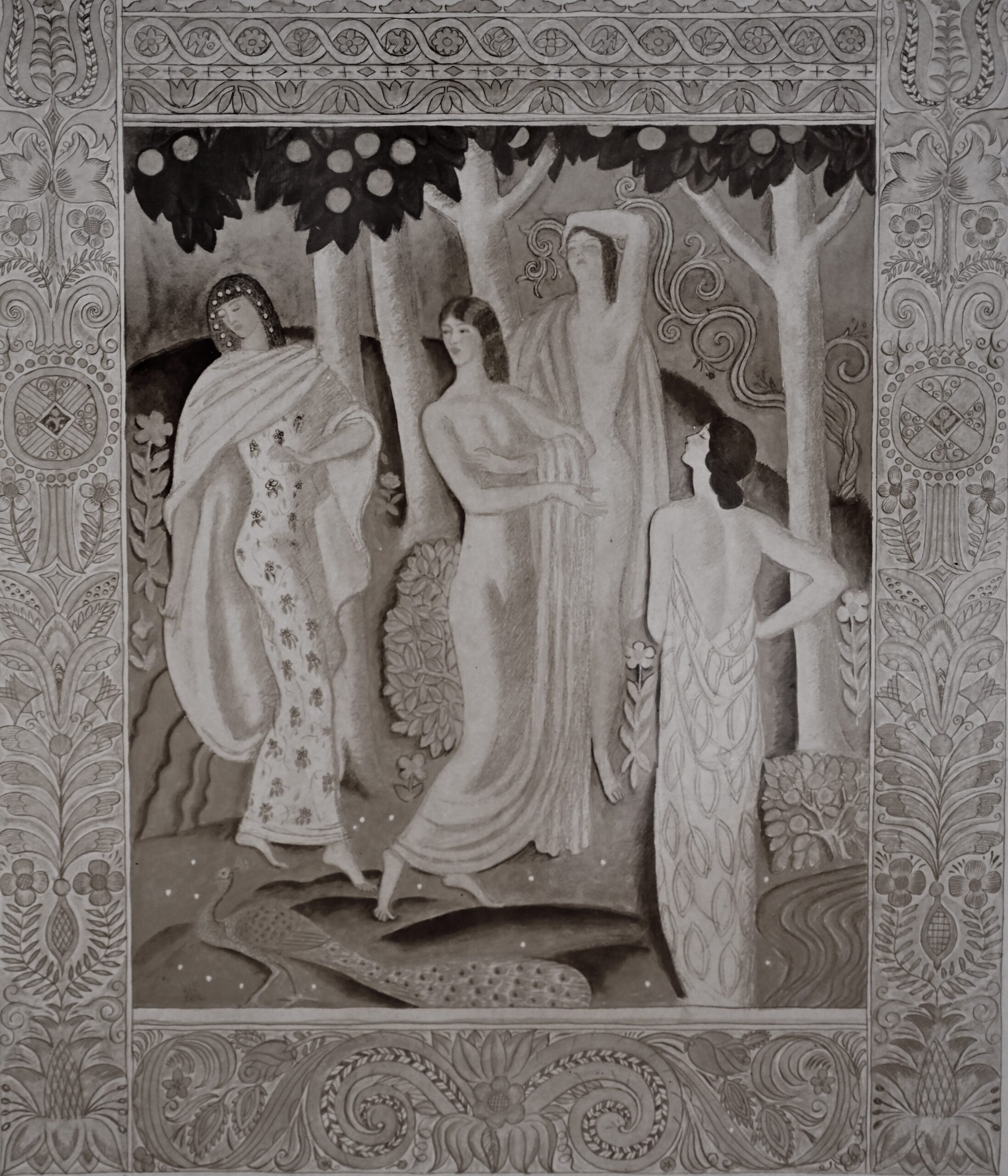
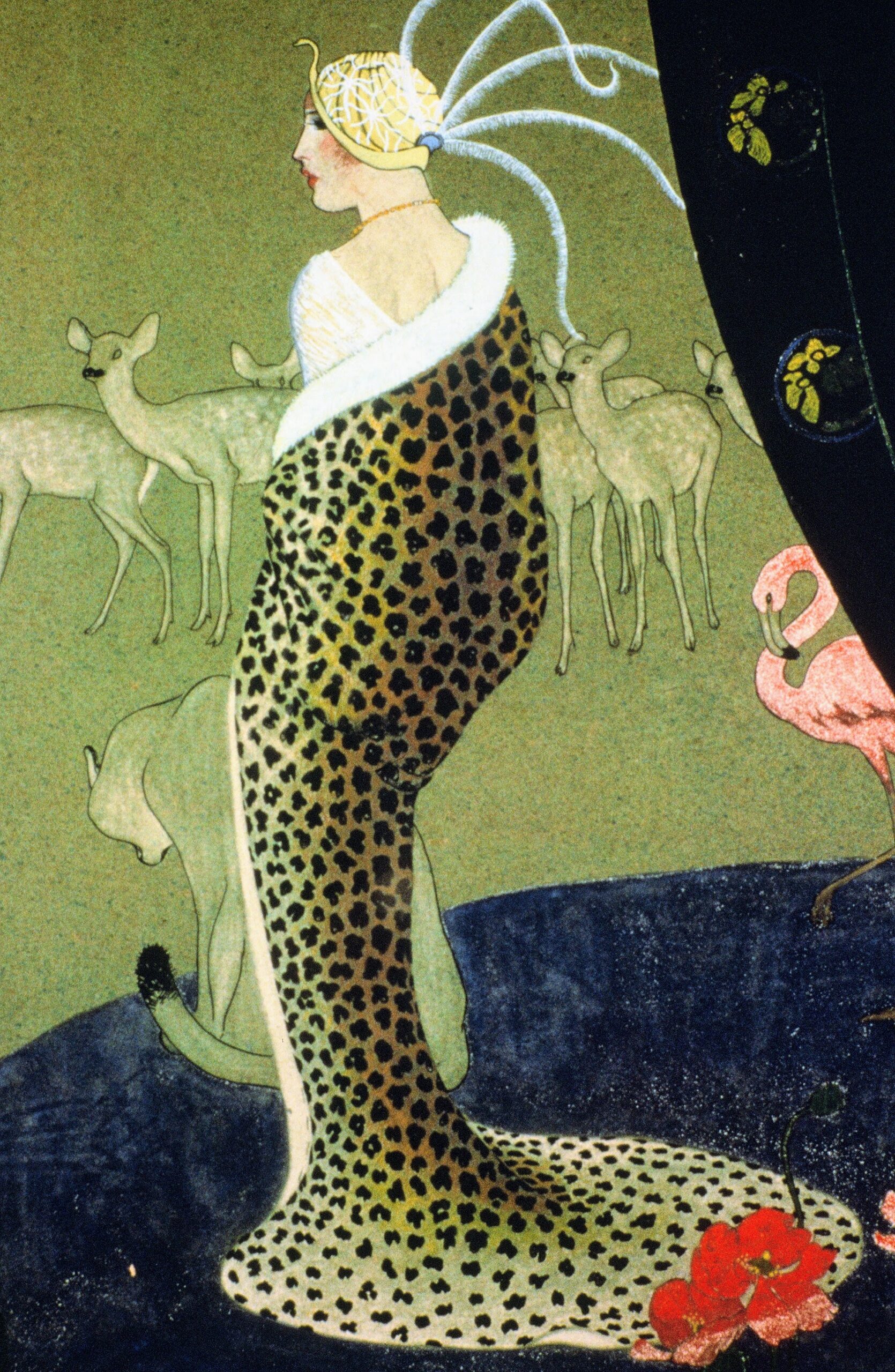
Ulreich’s earliest female imagery was traditional representational work created in academic settings in the 1910s. By the early 1920s his feminine subjects morphed into idealized depictions of women, presenting them as ethereal, distant and almost angelic figures. Often presented in groups of three of four, the images were frequently adorned with sophisticated decoration. An art critic of the period likened Ulreich’s work to the decorative paintings of Botticelli, imbued with vivid Asian color and detail. The decorative element of the work also suggests the influence of The Nabis Movement and especially the paintings of Edouard Vuillard, who celebrated the decorative element in fine art.